
Analytic
analytic
The Analytic object contains details about the analytic technique used to analyze and derive insights from the data or information that led to the creation of a finding or conclusion.
Attributes
| Caption | Name | Type | Description |
|---|---|---|---|
| Algorithm | algorithm | String | The algorithm used by the underlying analytic to generate the finding. |
| Category | category | String | The analytic category. |
| Description | desc | String | The description of the analytic that generated the finding. |
| Name | name | String | The name of the analytic that generated the finding. |
| Raw Data | raw_data | JSON | Group:contextThe event data as received from the event source. |
| Record ID | record_id | String | Group:primaryUnique identifier for the object |
| Related Analytics | related_analytics | Analytic[] | Other analytics related to this analytic.
|
| State | state | String | The Analytic state. |
| State ID | state_id | Integer | The Analytic state identifier.
|
| Type | type | String | The analytic type. |
| Type ID | type_id | Integer | The analytic type ID.
|
| Unique ID | uid | String | The unique identifier of the analytic that generated the finding. |
| Unmapped | unmapped | Unmapped[] | Data from the source that was not mapped into the schema. |
| Version | version | String | The analytic version. For example: 1.1. |
Relationships
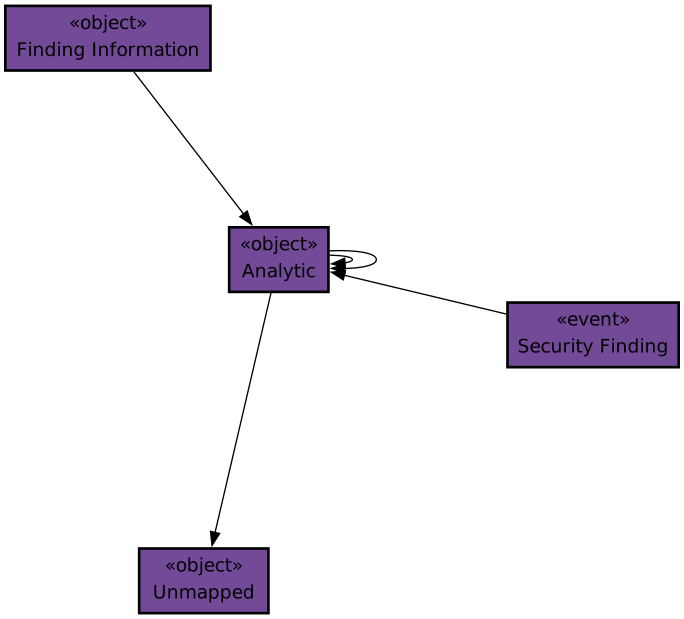
Inbound Relationships
These objects and events reference Analytic in their attributes:
Outbound Relationships
Analytic references the following objects and events in its attributes:
This page describes qdm-1.5.1+ocsf-1.6.0
Updated 4 months ago
Did this page help you?